What to see at Piazza San Carlo
Six stops that tell the story of Turin's baroque drawing room, from the twin churches to the cafés that invented the aperitivo.
The Twin Churches
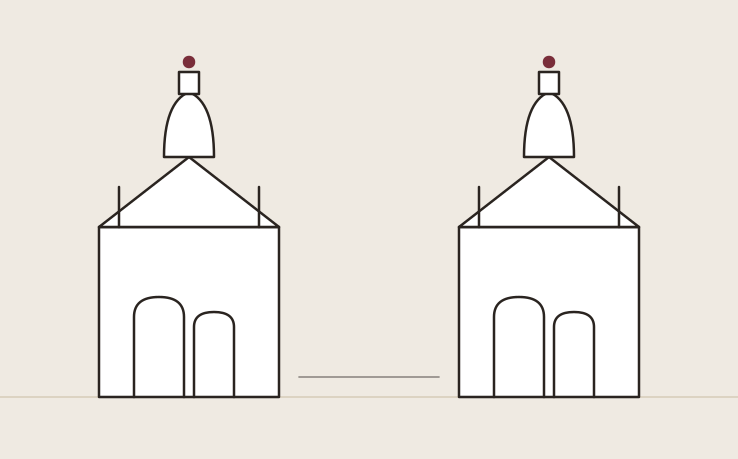
Santa Cristina (1640) and San Carlo Borromeo (1619) face each other in near-perfect symmetry, even though their façades were actually completed in different eras. The scenic effect, designed for anyone arriving from Via Roma, remains one of Turin's most photographed views.
Statue of Emanuele Filiberto
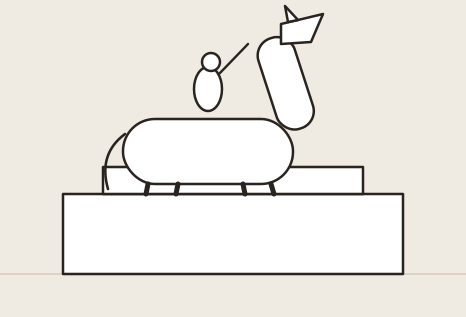
Created by Carlo Marochetti (1838), it depicts the Savoy duke sheathing his sword after the 1557 victory at San Quentin. In Turin dialect it's known as "'l caval ëd bronz" — the bronze horse — a meeting point for locals for generations.
The Porticoes
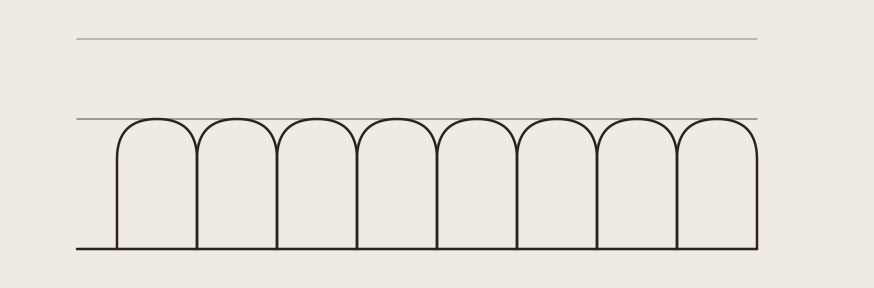
Part of the nearly 18 km of porticoes running through central Turin, one of the most extensive portico systems in Europe. Those of Piazza San Carlo, elegant and regular, are among the oldest in the city.
The Baroque Palaces
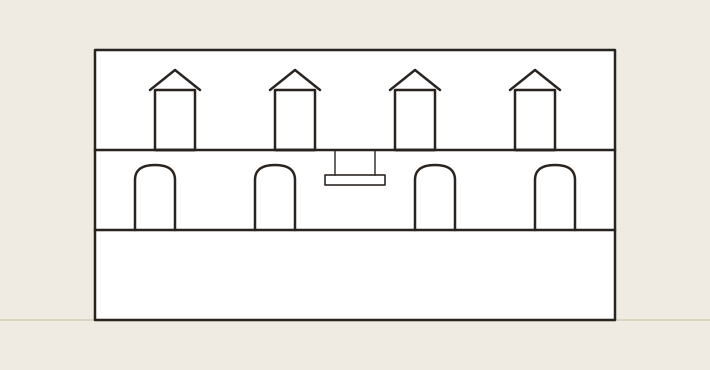
Palazzo Solaro del Borgo and the other buildings enclosing the square are among the finest examples of Piedmontese baroque, with pediment windows and wrought-iron balconies typical of Savoy architecture.

Via Roma
The elegant street connecting Piazza San Carlo to Piazza Castello, rebuilt in rationalist style in the 1930s. Luxury boutiques beneath scenic porticoes — the heart of Turin's shopping district.
The Historic Cafés
Caffè San Carlo (1822) and Caffè Torino, with its famous bronze bull threshold said to bring good luck: two city institutions where the modern aperitivo is said to have been born, and where the traditional bicerin is still served.
Want to experience Turin like a local?
The Egyptian Museum and the Reggia di Venaria are worth booking ahead, especially on weekends.
See tickets and experiences
Space reserved for local operators.